Conversion optimization: more enquiries without more ad spend
More enquiries and sales from the traffic you already have.
- reply within 24 hours
- cancel monthly
- your access stays yours



Often the problem is not too little traffic, but what happens with it on the website. We analyse where visitors drop off, test improvements based on data, and raise the share of visitors who become customers — frequently the cheapest growth available.
Traffic costs money. What happens next decides the outcome.
Most websites do not have a reach problem, they have a handover problem. Three patterns turn up in almost every analysis.
You pay twice for the same visitor
Someone who arrives through an ad and leaves again has cost money and left nothing behind. Next time you pay for that same person again.
The form is the quietest part of the page
Most forms ask for more than a first contact needs. Every extra required field costs enquiries — and nobody complains, they simply leave.
Nobody knows where people drop out
Without clean tracking every change is a guess. Whether it helped shows up months later, if at all.
Measuring instead of guessing
Short, so it is clear what we are talking about — and why the order matters.
What actually reaches you
Not a package name — the things that genuinely land on your desk, and how often.
- Tracking setup
- GA4 and Google Tag Manager configured so every conversion is counted once and counted correctly.
- Drop-out analysis
- Heatmaps and session recordings on the pages your revenue runs through.
- Test backlog with hypotheses
- A prioritised list: what we want to change, why, and what we expect to happen.
- Running tests
- Never more than one test per page at a time, or afterwards nobody knows what did the work.
- Rolling out the winners
- What wins gets built in permanently. What loses is written down and not tried again.
- Written review
- What was tested, what came out, and what we do next because of it.
- Looker Studio dashboard
- Your conversion numbers in one place, readable without us in the room.
- Quarterly review
- Three months looked at together: what we learned, what we dropped, what comes next.
How one cycle runs
Always the same order. Start anywhere else and you optimise against numbers that are wrong.
Measure
The tracking is checked first. While the numbers are wrong, every optimisation is a matter of taste.
Understand
Heatmaps, recordings and funnels show where people leave — usually not at the point everyone assumed.
Hypothesis
One sentence: if we change X, Y happens, because Z. Without the third part it is an idea, not a hypothesis.
Test
Two versions, the same audience, enough runtime. We do not stop a test because it looks good after three days.
Build in and measure again
The winner is built in permanently, the baseline is reset, the next test starts.
What's included
- Analysis with GA4, heatmaps and session recordings
- Clear hypotheses instead of gut feeling — then A/B tests
- Optimization of landing pages, forms and checkout
- Clean tracking set-up with Google Tag Manager












.png&w=3840&q=75)





What we work in
Everything runs in your own accounts. We work inside them, not alongside them — and if you leave, it all stays.
Certified
- Google Partner
- partnersdirectory.withgoogle.com
- Meta Business Partner
- Shopify Partner
What we work in
- Google Analytics 4
- The events and audiences the decisions come from
- Google Tag Manager
- Server-side tagging and Consent Mode
- Looker Studio
- The dashboard you can read without us
- WordPress
- The foundation under most sites we build
- WooCommerce
- Shop functionality for WordPress sites
All marks named here belong to their owners. Naming them implies no partnership, apart from the certifications shown above.
How you will know whether it works
We have no published case study for this service. Rather than a number you cannot check, here are the measures we are willing to be held to.
Conversion rate per landing page
- Measured in
- GA4
- Compared against
- the 30 days before the test
Form completion rate
- Measured in
- Google Tag Manager
- Compared against
- the share who opened the form at all
Revenue per visitor
- Measured in
- the shop backend, not GA4
- Compared against
- the same period last year
A reliable read needs enough visitors, not enough weeks. With little traffic a test takes correspondingly longer — we say so beforehand, not afterwards.
When conversion optimization is worth it — and when it is not
This does not work everywhere. Better to rule it out now than explain it later.
A fit when
- You already have visitors arriving through ads or through search.
- There is a clear action on the page: a form, a call, a purchase.
- Changes to the website can actually be made — by your team or by ours.
- You can wait a few weeks for a test to say something.
Not a fit when
- Below roughly 1,000 relevant visitors a month, every test runs so long that it no longer answers anything.
- If no conversion tracking exists yet, that is where we start. It is its own project, not optimisation.
- If the website is being rebuilt in the next few months, you would be testing something that is about to disappear.
- If revenue is needed in the short term, optimisation works more slowly than one more campaign.
As a rule of thumb: from around 1,000 relevant visitors a month on the page you want to optimise. Below that we recommend reach first — even when that costs us the work.
What it costs
No price list, because the work differs. But the three things that drive it are knowable in advance.
How many pages and forms are involved, whether clean tracking already runs, and whether we make the changes ourselves or hand them to your developers.
A one-off part for tracking and the first analysis, then a monthly retainer for testing and review. No percentage of your revenue.
Cancellable monthly. It starts making sense from about three months, because no test has finished before then — that is our recommendation, not your contract.
In the free analysis you get a concrete figure for your situation before you decide.
Frequently asked questions
Here you will find the most important questions and answers about our services, how we work and what a collaboration looks like. If your question is not here, just get in touch – we are happy to help personally.

What does conversion optimization cost per month?
It depends on three things: how many pages and forms are involved, whether clean tracking already runs, and whether we make the changes ourselves or hand them to your developers. You pay a one-off part for tracking and the first analysis plus a monthly retainer — never a percentage of your revenue. The free analysis gives you a concrete figure for your situation.
At what point is conversion optimization worth it?
As a rule of thumb, from about 1,000 relevant visitors a month on the page in question. Below that every test runs so long that the result answers nothing — at which point more reach is the better next step, and we say so even when it costs us the work.
How long before I see something?
The first test is usually running within two to three weeks, because the tracking gets checked and the drop-out points analysed first. How long it then runs is decided by your traffic, not the calendar: a test ends when it has seen enough visitors, not when a month is up.
Does my website have to be rebuilt for this?
No — and if it did, conversion optimization would be the wrong brief. We change individual elements on existing pages: forms, headlines, ordering, buttons. If a relaunch is coming anyway, wait: you would be testing against something that is about to disappear.
What is a good conversion rate?
The question misleads. Industry benchmarks compare unrelated sites with unrelated traffic and unrelated goals — a trades business with 40 enquiries a month and a store with 4,000 orders sit in the same table. The only useful reference is your own rate beforehand. That is exactly why every test carries a baseline to be measured against.
Do you need access to my website and accounts?
To Analytics and Tag Manager yes, or we cannot measure anything. To the website only if we are making the changes ourselves — otherwise we hand them over as a task for your developers. Every account stays yours: we are added as a user and removed again, and nothing is created in our name.
What happens when a test loses?
The old version stays and we know something we did not know before. Roughly half of all tests do not win — anyone promising otherwise is not testing, they are rebuilding and calling it a test. Every losing test is written down so the same idea does not resurface six months later.
Can this be done without A/B tests?
Yes, and with low traffic that is often the more honest route. We then work with analysis, session recordings and changes measured before and after. It is weaker than a real test, because season and campaigns bleed into it — so we tell you how certain a finding is rather than making it sound more certain.
Who owns the data and the tests in the end?
You do. The accounts are in your name, the dashboard sits in your Looker Studio, and you get the test documentation as a file. When the work ends we remove our access and you keep everything — including what we learned from the tests that did not win.
We will look at your numbers
Send us your website. You get an assessment of where the biggest drop-out points are — and whether optimisation is worth it at your traffic level at all.
From our day-to-day
Follow us on Instagram
A look at our work, our projects, practical online marketing tips and what happens behind the scenes — straight from Instagram.
 @wegotitmarketing8 B-Roll Videos to Film 🎬 Hier zijn een paar voorbeelden van b-roll shots die je content een boost geven.✨ Bij We Got It helpen we bedrijven met creatieve content. Zin om samen aan de slag te gaan? DM ons! 💌
 @wegotitmarketingGOOGLE ADS QUICK TUTORIAL 🚀
 @wegotitmarketingNEW CASE: PST Steigerbouw Van steigers tot websites — samen bouwen we aan groei! 💻🚀
 @brandup.creativeIk heb ze zelf allemaal gemaakt 😅 Maar het mooie is: je kunt er wel iets aan doen. ✨
 @wegotitmarketingBOOST JE REEL! 🤍 6 simpele moves die je reel na het posten een flinke boost geven. ✨
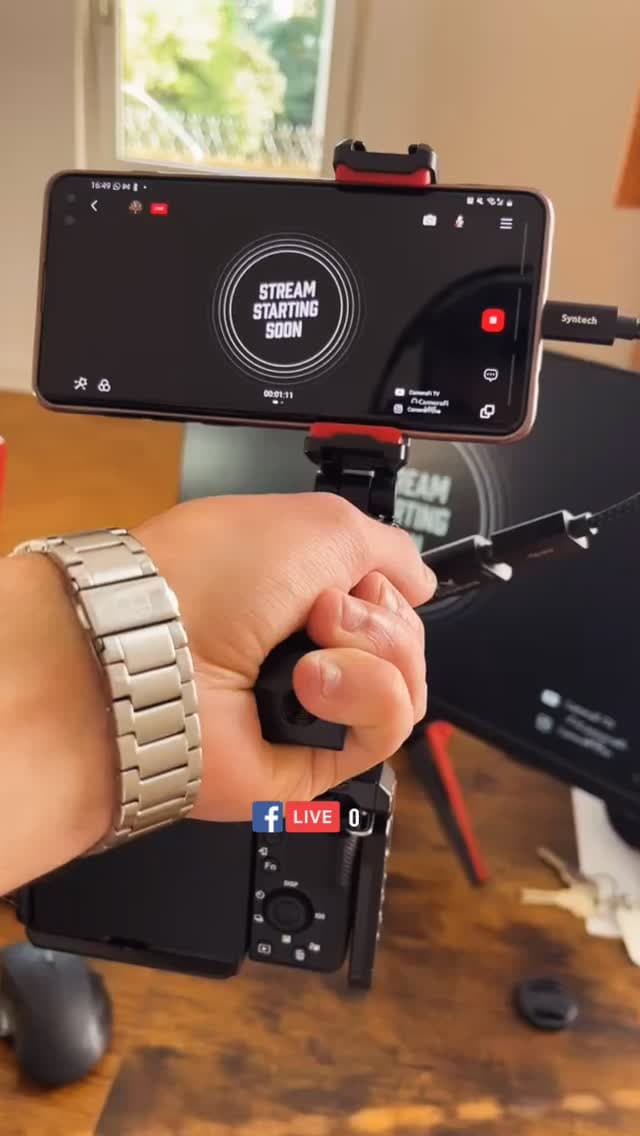 @bekas_iliasGo live like a pro! 🎥✨ Connect your Sony camera to your phone and stream live to YouTube or other platforms.
 @brandup.creativeUGC X SONY EVENT ✨ Tussen alle camera’s en video-apparatuur viel m’n oog weer op iets wat ik al jaren geweldig vind: hun speakers 🔊 Als zangeres ben ik altijd bewust bezig met geluid, dus goede audio vind ik heel belangrijk. De speakers van Sony zijn al jaren mijn favoriet! Warm, helder en krachtig.
 @brandup.creativeSOCIAL MEDIA UPDATES 🤍 Wist jij al van deze social media updates? Als social media manager is het cruciaal om voorop te blijven. Niet omdat je alles moet volgen maar omdat deze updates je tijd besparen, je bereik vergroten en je contentstrategie versterken.
 @wegotitmarketing📍 Case live: Die Dentalerie – Van offline naar een digitale, professionele praktijk. Voor Zahnarztpraxis Savic in Bad Lauterberg (Duitsland) ontwikkelden we een complete digitale presence. Geen website? Geen probleem. Wij bouwden een moderne, gebruiksvriendelijke site die vertrouwen uitstraalt én converteert – compleet met professionele fotografie en een slimme afspraakmodule.
 @wegotitmarketingWij zijn We Got It Marketing 🚀 Jouw partner in online groei! Benieuwd wat we voor jouw merk kunnen betekenen? 📩 Slide in onze DM en let’s grow together!
 @wegotitmarketingJe volgers tellen niet als ze niets opleveren. 📉 Likes zonder strategie? Dat is zonde van je tijd (en geld).
 @wegotitmarketingJe website is meestal je eerste indruk… Maar is het er eentje die bijblijft?
 @wegotitmarketingLet’s talk Instagram for business. 📲🔥 Instagram is dé plek om je bedrijf zichtbaar te maken, je verhaal te vertellen en nieuwe klanten aan te trekken. Maar… dat kost tijd, strategie en de juiste content.
 @wegotitmarketingSome BTS moments from our content day 🎬👀